Buying guides
Celadon glaze color variation: approving wholesale samples
A practical approval record for celadon jars, vases and planters: compare coordinated pieces, document finish decisions and plan for replenishment.
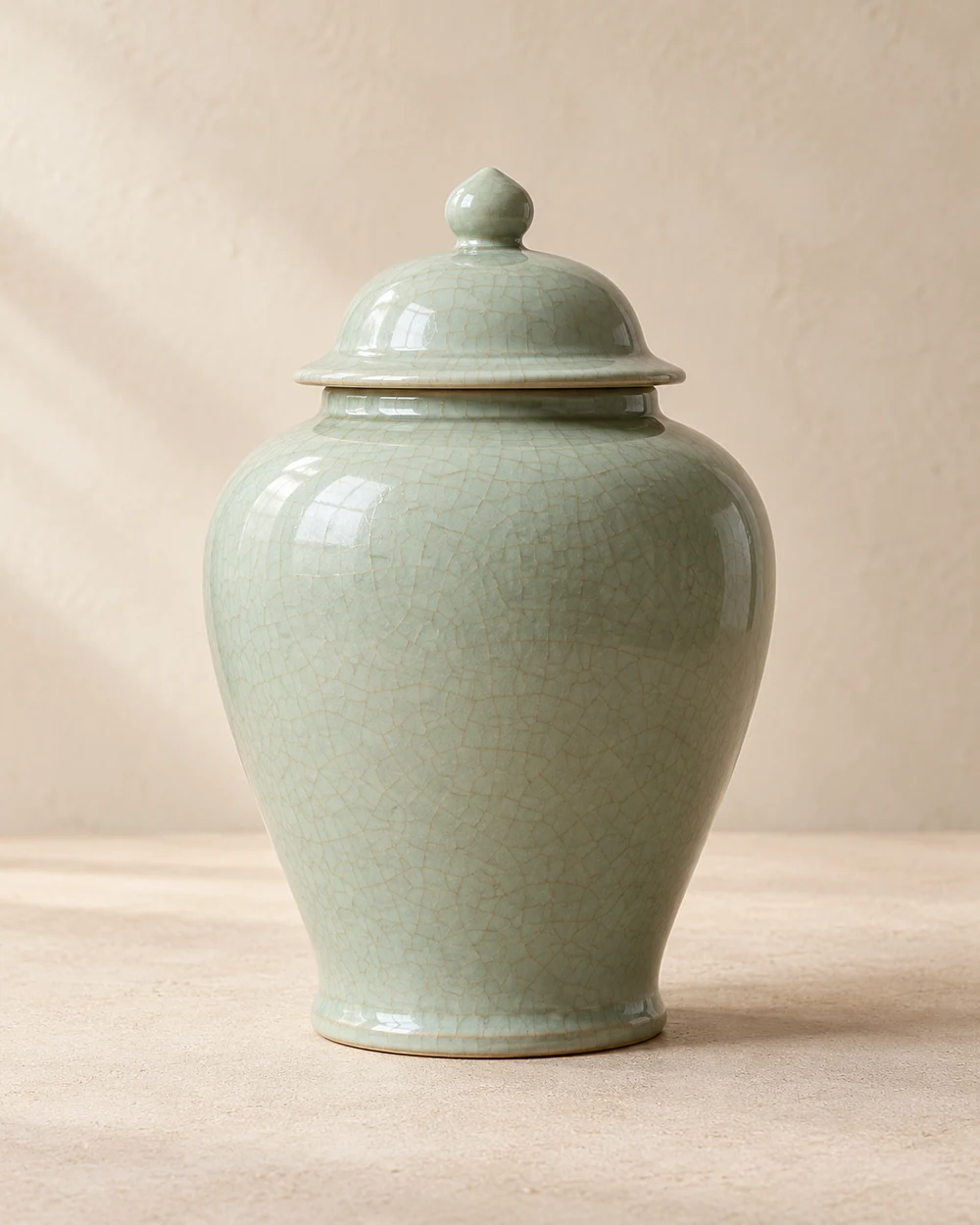
Celadon glaze color variation becomes a buying problem when the person approving a sample and the person receiving the shipment are judging different things. One may remember a pale green photograph; the other may expect every jar in a pair to look identical. A useful approval process records the intended relationship between pieces, the conditions of comparison and who can accept a difference.
This guide is for buyers selecting celadon-look porcelain jars, vases and decorative planters. The cover is a catalogue reference, not evidence of a particular glaze recipe, material test or available production batch. The aim is to turn a preferred appearance into an approval record that can be used again when the goods arrive or a replenishment order is discussed.
What the word celadon does, and does not, specify
The Smithsonian National Museum of Asian Art's celadon glossary associates the glaze with green, gray and jade-green appearances. That range is a reason to describe the actual finish you want rather than rely on the word alone. A pale gray-green jar and an olive-toned vase can both appear in a celadon search without belonging in the same coordinated display.
For historical context, The Metropolitan Museum of Art's Goryeo celadon essay explains that raw materials and firing conditions contribute to the appearance of those ceramics. Its discussion concerns historical Korean wares. It does not identify the composition, origin or firing method of a contemporary catalogue product.
Keep the product body and the finish as separate questions. Ask which ceramic body is proposed for the selected SKU and what finish is actually being quoted. Do not infer porcelain, a named kiln tradition or handmade production from a green surface or a photographed crackle pattern.
Decide what has to match before reviewing samples
Start by recording how the pieces will be displayed. Two covered jars on opposite ends of one console are judged together. Planters in separate rooms may be judged against a broader interior palette. Those situations justify different buying requirements, even when the catalogue color name is the same.
Write a display relationship beside each reference: coordinated pair, visible group or individual accent. Then identify which features matter most. A buyer might prioritise a similar overall green tone for a pair while accepting small differences in surface pattern. Another project may care more about gloss than about an exact match between pieces that are never seen together.
These priorities need agreement. They are not automatic allowances for variation. If no difference is acceptable in a particular feature, discuss whether that expectation can be met before proceeding with the order.
Build a comparison setup the receiving team can repeat
Choose a regular review position with a simple background and record the lighting used. Compare the samples together in that position. If the intended room is available, also review them there and note which setting governs the purchasing decision.
Keep the whole object visible for the first comparison. A close photograph of a decorative area may miss a lid that reads differently from its body. For a planter, the rim and the visible upper interior may matter when it is placed below eye level. For a vase, the shoulder can be a prominent part of the appearance in the final arrangement.
Photographs support this record but should not become an unqualified promise of screen-to-product accuracy. Retain an overview showing the items together and separate detail views of any disputed feature. Avoid mixing edited catalogue images with receiving photographs as if both were made under the same conditions.
Use an approval record with decisions, not vague adjectives
A note saying only “nice pale green” leaves the next reviewer to invent the criteria. A better record identifies the physical sample, its relationship to other pieces and the evidence supporting the decision. The following is an internal purchasing template, not a laboratory standard or an inspection certification.
| Record field | What to capture | Decision it supports |
|---|---|---|
| Sample identity | SKU, sample reference, date and proposed finish | Which object was actually reviewed? |
| Display relationship | Pair, visible group or individual accent | Must pieces be assessed together? |
| Comparison conditions | Review location, lighting and reference images | Can the receiving team repeat the review? |
| Critical appearance | Agreed tone, gloss and visible areas | Which differences need escalation? |
| Decision status | Approved, rejected or awaiting a defined check | Has the reviewer actually released this choice? |
| Decision owner | Named purchasing contact and review date | Who can resolve a later disagreement? |
Keep functional requirements in the same buying file but assess them separately. Color approval cannot establish that a planter has drainage, that a vase holds water or that a decorative bowl is suitable for food contact. Each use needs its own confirmed product information.
Consider a hypothetical pair before approving a whole range
Imagine a retailer choosing two covered celadon jars for one entrance console. The first sample is appealing, but it gives no evidence about how two supplied units will look together. The buyer requests a proposed pair and reviews both bodies with their own lids in one arrangement.
Suppose one lid appears noticeably darker to the buyer. The useful response is to identify the sample and the area of concern, keep the two jars in the agreed review conditions and send an overview plus detail image. Ask whether a different selection or a different finish direction should be reviewed. Do not assume that the difference will disappear in the shipment.
The buyer then records the agreed outcome. It might be approval of that pair, rejection of the proposed combination or a request for another sample. This example describes a decision process, not a completed Willshine Planter order or a promise that matching or replacement stock is available.
Keep surface pattern and damage observations separate
A crackle-like surface in a photograph does not establish the condition or integrity of the actual vessel. Ask how the intended finish is described for the selected product. During physical review, record any concern about the body, rim, lid seating or base separately from aesthetic preferences about the glaze.
If a visible line, chip or other mark causes concern, document its location and ask for the product-specific assessment needed to resolve it. Avoid accepting every irregularity as character, or rejecting every visible line using a general rule from a buying guide. The agreed product specification and appropriate assessment must govern the decision.
This distinction also helps receiving teams communicate clearly. “The tone differs from the approved sample” and “there is a mark at the rim” are different observations. Reporting both precisely gives the supplier a practical issue to investigate.
Plan for replenishment while the first sample is still available
A finish reference is most useful when it remains identifiable after the original order. Keep the approved sample or agree another workable physical reference arrangement. Preserve dated images and the written decision with the SKU so a later buyer can understand what was accepted.
For replenishment, tell the supplier whether new pieces will sit beside the earlier purchase or be displayed independently. Review the proposed supply against that actual requirement. Approval of one sample or shipment should not be treated as a guarantee that a future batch will be identical.
If the original reference is unavailable, say so. A faded recollection or an isolated phone photograph leaves more uncertainty than a retained physical sample. The buying decision may need a new review rather than an instruction simply to repeat the old color name.
Send a finish brief that can receive a specific answer
Browse the porcelain references, temple jars and ceramic planters by the form your project needs. Select the relevant SKUs and explain the display relationship, desired finish direction and sample questions. Include estimated quantities and destination so the enquiry has commercial context without assuming a price or lead time.
Our jar and planter specification guide covers the wider buying file. For a planter, the drainage and cachepot guide helps keep appearance approval separate from the watering arrangement. Send a sample enquiry with the references you want to review, or use the trade quotation request when your selection is ready for a confirmed offer.
A finish brief should leave the decision owner with a clear next step: review a proposed sample, resolve an identified difference or approve a documented appearance for the stated use. Final materials, dimensions, functional suitability and commercial terms remain subject to confirmation for each selected product.