Buying guides
Specifying temple jars and planters: a practical buying guide
A practical specification framework for retail and interior buyers: compare jar and planter requirements, review samples, plan large-object installation and prepare a clear quotation brief.
Selecting a porcelain jar or planter from a photograph is the beginning of a buying decision. A useful specification connects that appearance to a particular place, a maintenance routine and a delivery plan. Without those connections, two quotations for apparently similar pieces may describe very different requirements.
This guide is for retail buyers and interior project teams comparing decorative temple jars and ceramic planters. It sets out what to ask for, how to review a sample and which decisions to record before approving an order. It does not certify the performance of any product in the collection. Dimensions, construction, availability and commercial terms need written confirmation for the selected SKU.
1. Define the job before comparing the shape
Begin with one sentence that describes how the object will be used. “A covered decorative jar on a reception console” and “a container for a living plant in a hotel lobby” create different purchasing questions, even when both pieces have a similar blue-and-white surface.
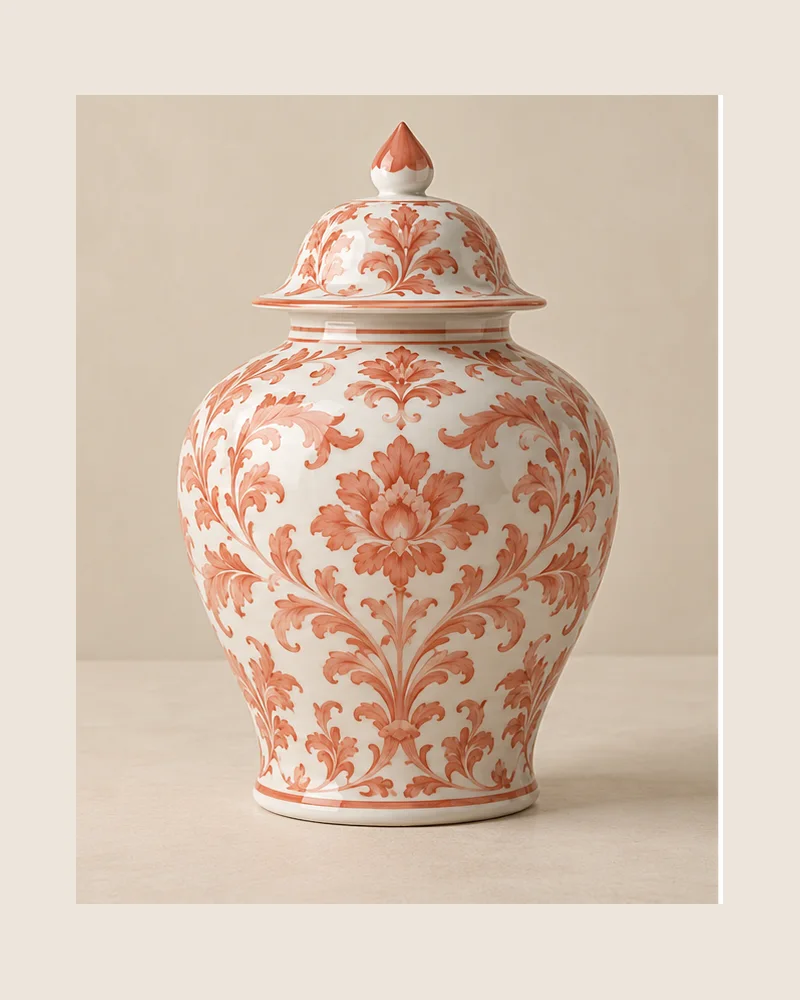
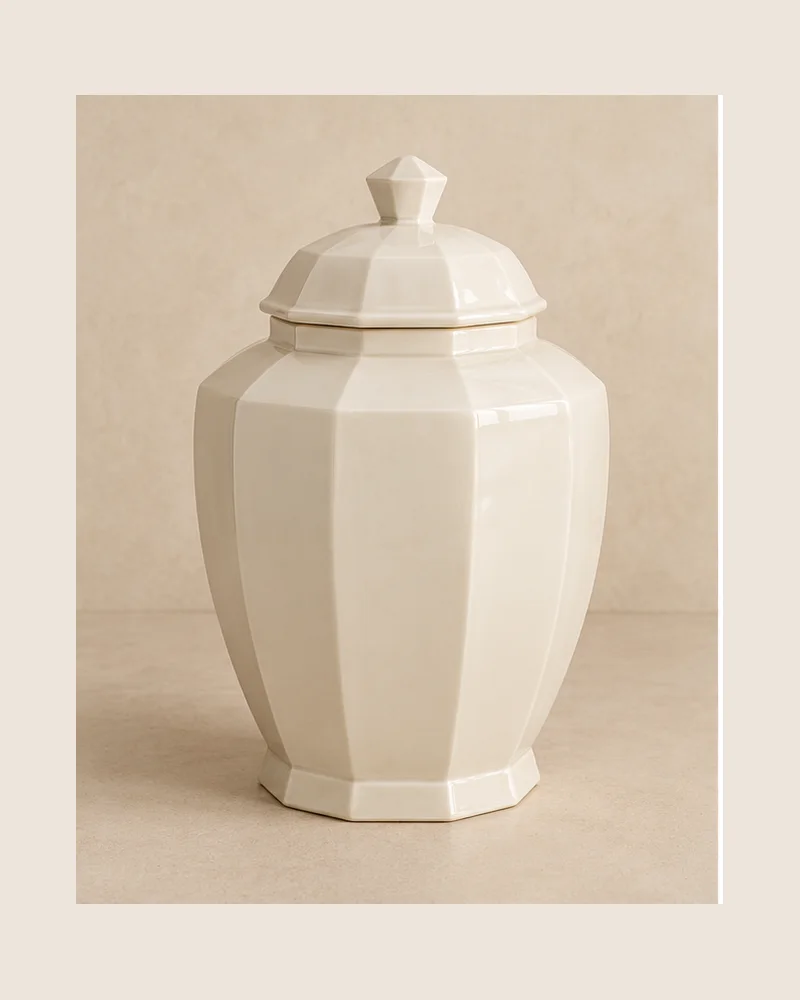
A decorative jar is primarily evaluated as an assembled object: body, lid, finial, pattern and overall silhouette. Ask whether the lid is removable, how it seats and whether the supplier identifies a matching lid and body as a set. A loose lid should not be assumed to lock in place or to be safe to lift by its finial.
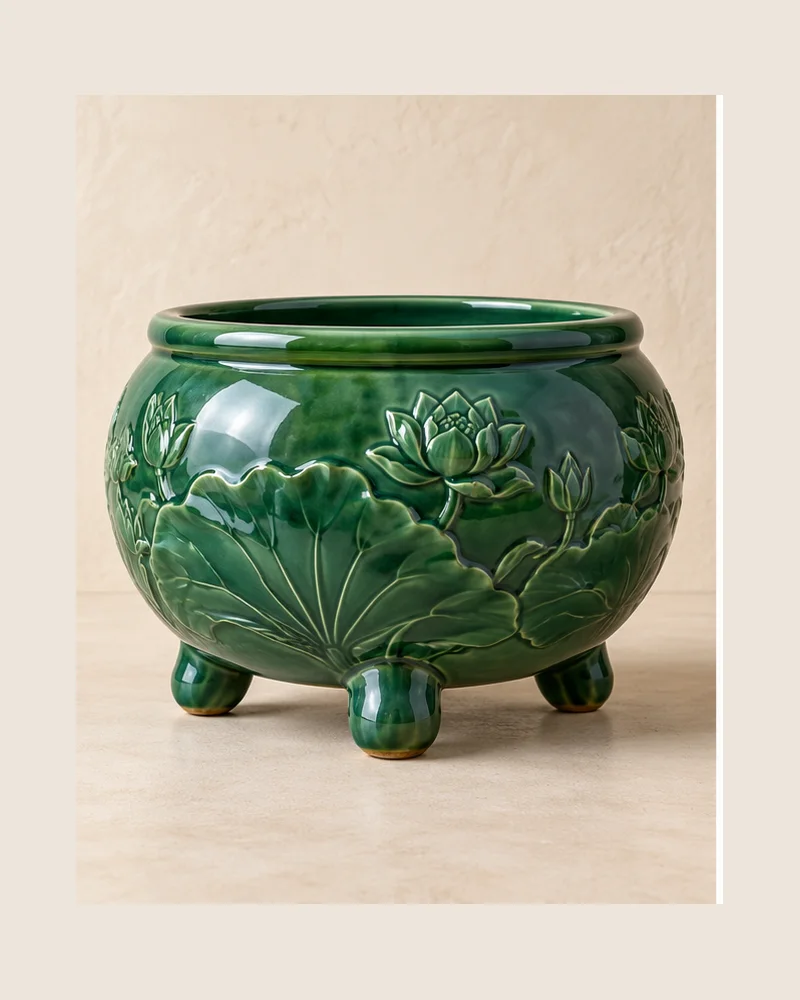
For a planter, identify whether plants will grow directly in it or remain in a separate nursery pot. The distinction affects the usable opening, internal clearance, drainage and the person responsible for watering. Decide this before choosing solely by the external diameter.
| Intended use | What to compare | What must be confirmed |
|---|---|---|
| Covered jar on a console | Body and lid proportions, viewing height, pattern orientation | Assembled dimensions, lid fit, base contact and care instructions |
| Decorative outer planter | Opening and internal clearance around the inner pot | Liner arrangement, moisture protection and a practical watering method |
| Direct planting container | Root-space requirements and drainage arrangement | Intended use, drainage holes, suitable growing conditions and saucer provision |
| Large floor-standing object | Footprint, sightlines and installation route | Actual weight, support surface, handling method and site-specific stability review |
Write the intended use in the enquiry. A supplier can then flag a mismatch before the sample stage, rather than discovering it after a decorative vessel has been ordered for an unsuitable task.
2. Ask for a dimensional drawing, not just a height
Overall height is useful for composition, but it is rarely enough to establish fit. Request the maximum body width, base footprint, opening dimensions and relevant internal dimensions. For a covered jar, distinguish the body height from the assembled height with its lid. For a planter with a tapered interior, the opening can be wider than the usable space lower down.
Record what is being measured and the agreed tolerance. A statement such as “height approximately as photographed” cannot resolve a dispute about whether the finial was included. A dated drawing or a clearly annotated sample photograph is more useful than several unlabelled measurements in an email thread.
For an inner pot, consider its widest rim as well as its base. A pot may pass through the decorative opening and still sit too high, leaving the nursery rim visible. Ask how it will be removed for watering and whether the plant and its foliage can pass through the intended position without damage.
Do not estimate dimensions from a lifestyle photograph. Perspective, cropping and the scale of nearby furniture can all mislead. Use product imagery to shortlist the form; use confirmed measurements to approve the fit.
3. Separate a finish description from a performance claim
Terms such as celadon, matte white and blue-and-white describe an appearance or colour direction. They do not, by themselves, establish water resistance, frost resistance, scratch resistance or suitability for direct planting. Likewise, a glazed exterior does not tell you whether the interior or underside has the same finish.
Ask for photographs of the opening, interior, underside, foot ring and lid seating area, where relevant. These views answer practical questions that a front photograph cannot. If an object will be viewed from above on a low table, the inside and lid edge may matter as much as the main decorative face.
For pattern-sensitive work, request a clear reference for the side intended to face the room. Compare the continuity of the motif, its position relative to handles or edges, and the appearance of a pair together. Record whether a quoted pair is selected as a coordinated set or simply supplied as two units of one SKU.
A screen image is not a colour standard. Review the physical sample in the proposed lighting where possible, and describe the acceptable appearance in writing. If variation is acceptable, agree which features may vary and which are essential. Do not label every difference “handmade character” without first confirming the actual production method and the agreed acceptance criteria.
4. Resolve drainage and moisture before buying a planter
For living plants, distinguish the horticultural container from its decorative cover. Penn State Extension's guidance on repotting houseplants describes using a pot with drainage inside a decorative container, with space below the drainage opening so water can leave the growing medium. That is a useful starting point for discussing an inner-pot arrangement, rather than assuming that an attractive outer vessel is suitable for planting directly.
Confirm how the nursery pot will be removed or drained and how collected water will be emptied. A liner, saucer and outer vessel are different components; list which ones are included. Also establish who will protect the floor or furniture beneath the display and who will check for moisture during maintenance.
If direct planting is required, ask the supplier to confirm that use explicitly. Request the drainage-hole arrangement, the recommended supporting components and any limits on indoor or outdoor use. Choose the plant and maintenance approach with the person responsible for horticultural care. Decorative appearance alone is not evidence that a particular vessel can perform that role.
For cut flowers, separately confirm whether the selected vase may hold water and whether an insert is required. Do not transfer a water-use claim from one product in a collection to another merely because their surfaces look similar.
5. Review a sample against a written checklist
A sample review should produce a decision record, not just an impression that the piece “looks good.” Give the sample a reference, identify the SKU and finish, and keep the supplier's confirmed specification alongside your notes. Photograph it under consistent lighting, including the areas most important to its intended use.
Useful review points include:
- The complete silhouette, including a lid or saucer if supplied.
- The appearance of the surface in the intended viewing light.
- The rim, lid seating and base contact when the object rests on a suitable level surface.
- Visible chips, cracks, scratches or finish marks, recorded with photographs.
- The dimensions that control fit, checked against the agreed drawing.
- The way the object will be cleaned, moved and maintained in its actual setting.
Agree how observations will be classified before treating them as acceptance or rejection criteria. This checklist is a purchasing aid, not a laboratory test, a safety certification or an agreed statistical inspection plan. A visual sample cannot establish every performance characteristic of a production shipment.
The Canadian Conservation Institute's care guidance for ceramics and glass stresses the importance of careful handling and attention to vulnerable components. For a covered decorative jar, that supports a practical handling discussion: remove and support separate parts as appropriate, and do not assume a projecting handle or finial is a lifting point. Obtain product-specific instructions for the actual item.
6. Treat a 1.5-metre brief as an installation project
Suppose an interior concept calls for a floor-standing vase approximately 1.5 metres tall. This is a hypothetical design brief, not a statement that a particular Willshine Planter product is available at that height. Before requesting production, turn that desired scale into a route, a footprint and a handling plan.
Measure access at the building entrance, lift, doorways, stairs and the final approach to the display position. Use the packed dimensions for the delivery route and the unpacked dimensions for the final position. Confirm whether the lid, plinth or other components travel separately and where unpacking can happen safely.
Ask for actual product and packed weights. Height alone cannot establish whether the base is stable or the support surface is suitable. For a public or frequently used space, have the responsible installer or qualified project professional review placement, support and any restraint requirements. Do not improvise ballast or adhesives without a confirmed method for the selected object and site.
Consider cleaning access and future removal, too. A piece that fits into an empty lobby may be difficult to move after furniture is installed. Assign responsibility for unloading, carrying, positioning and the disposal or retention of packaging before approving delivery.
7. Compare quotations on the same basis
A lower unit price does not necessarily describe a lower cost for the same requirement. Check whether each quotation includes the same finish, lid, liner, saucer, packaging, inspection arrangements and delivery scope. Ask for the packing quantity, outer dimensions and weight so the logistics comparison is based on an actual proposed shipment.
Keep product cost, packing, freight, insurance, import charges and local delivery visible as separate lines where applicable. Confirm which party arranges each stage and which costs remain estimates. Taxes and import requirements depend on the destination and transaction; have the relevant logistics or customs adviser confirm them rather than copying a generic percentage from a buying guide.
For a mixed assortment, record quantities per SKU rather than a single total. A quotation for one finish and one size is not automatically transferable to a selection with several shapes. Ask for the minimum quantity, sampling arrangements and proposed timing for the actual combination you want.
8. A worked example: one console, one planted corner
Imagine a buyer selecting a covered jar for a reception console and a coordinating planter for a nearby living plant. The initial image shortlist looks cohesive, but the confirmation work differs.
For the jar, the buyer records the available console depth, the desired viewing direction and the assembled height limit. They request the base footprint, lid details and a sample photograph from the entrance viewpoint. The decision is about composition and fit, supported by a confirmed specification.
For the planter, the buyer starts with the nursery pot selected by the plant-care team. They request internal clearance and a removal method, then agree how drainage and surface protection will work. The decision is about appearance plus a maintainable planting arrangement.
The two pieces can share a visual language without sharing every functional specification. Keeping these requirements separate makes the enquiry easier to answer and the sample easier to assess. This example is illustrative; it is not a description of a completed customer project.
9. Copy this brief into your enquiry
Use the following fields to turn a shortlist into a clear request:
- Selected products: names, SKUs and preferred finishes.
- Intended use: decorative display, cut flowers, outer planter or direct planting.
- Placement: room type, support surface and main viewing direction.
- Dimensions to confirm: assembled height, body width, opening, internal clearance and base footprint as relevant.
- Included components: lid, liner, nursery pot, saucer, plinth or other accessories.
- Quantities: units per SKU and whether coordinated pairs are required.
- Sample requirements: the questions the sample must help you resolve.
- Delivery: destination, access constraints, required delivery window and handling responsibilities.
- Acceptance record: the drawing, finish reference and review notes to be agreed before an order.
You can browse the full collection, review our wholesale and project enquiry process, or send a specification request. Where a detail is not yet confirmed, state the question rather than filling it with an assumed value. That gives the supplier a clear next step and keeps the selection grounded in the actual project.
Sources and scope
- Penn State Extension: Repotting Houseplants, for the distinction between a draining planting container and a decorative outer container.
- Canadian Conservation Institute: Care of Ceramics and Glass, CCI Notes 5/1, for general principles of careful handling of ceramic objects.
The comparison tables, enquiry framework and hypothetical examples are editorial guidance. They do not replace a supplier's confirmed specification, product testing, horticultural advice or a site-specific installation assessment. No prices, stock availability, material test results or factory capabilities are asserted here.