Buying guides
Ceramic cachepot size: checking nursery pot fit
Compare the entry opening, interior profile and maintenance route before selecting a ceramic outer planter for a nursery pot.
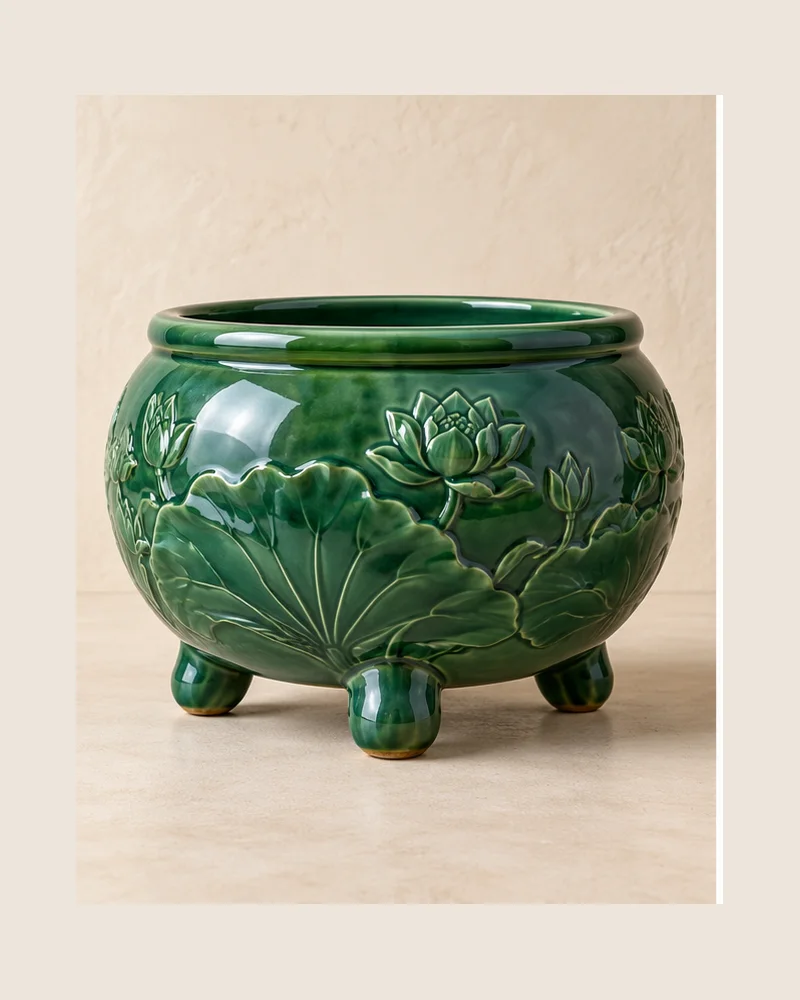
Ceramic cachepot size should be checked against the nursery pot that will actually sit inside it. The decorative container's outside width is useful for planning a room, but it does not describe the interior opening, the usable depth or the route through which an inner pot must pass. Those are different measurements with different jobs.
This guide explains a fit review for an indoor decorative outer planter. It assumes the plant remains in a separate growing container. Choosing direct planting is a separate decision. Catalogue images illustrate possible forms; they do not confirm dimensions, water containment, load capacity or suitability for a particular plant.
Start with the inner assembly
Identify the nursery pot or proposed replacement before choosing the decorative outer container. Record its actual external profile, including the rim, widest section, height and any saucer or other component that forms part of the planned assembly. A nominal pot size may not capture all of those features.
The plant-care team should confirm whether that inner pot remains appropriate for the plant. The Royal Horticultural Society's container guide notes that container shape can make later removal difficult, particularly when the body is wider than the opening. That horticultural observation is a reason to consider access, not a universal dimension rule for decorative cachepots.
Avoid changing the growing container solely to match a preferred ceramic silhouette without involving the person responsible for plant care. The decorative choice and the horticultural choice need to work together, while keeping their approval responsibilities clear.
Measure the route, not only the widest cavity
A rounded outer planter may have a generous interior body but a smaller opening. An inner pot can therefore appear suitable from the widest dimension and still fail to enter. Ask for the narrowest relevant opening and the interior profile, not just an external diameter.
Usable depth also depends on the whole arrangement. If a confirmed saucer or support is included, it occupies space. Record whether measurements are taken to the interior floor or to the top of that component. Mixing those definitions can make two apparently equivalent quotations describe different arrangements.
| Measurement | Why it matters | Who should confirm it |
|---|---|---|
| Inner pot maximum external width | Establishes the object that must pass through the opening | Plant supplier or maintenance team |
| Outer planter entry opening | Checks the access route | Ceramic supplier |
| Interior profile and usable depth | Checks seating within the cavity | Ceramic supplier with the proposed assembly |
| Complete assembly height | Establishes the intended visible rim relationship | Buyer and plant-care team |
| Removal space above and around it | Checks whether maintenance can happen in position | Site and maintenance team |
Do not invent a fixed clearance percentage from this table. The needed allowance depends on the forms, components and handling method. Agree it for the actual combination and verify it physically where the purchasing decision requires confidence.
Review ceramic cachepot size in its maintenance position
An assembly that fits on a workbench may be awkward beneath a shelf or beside a wall. Consider where a person will stand, how the inner container will be supported during removal and where it will be set down. Include the plant's foliage in the access review; the empty pot is only part of the arrangement.
Ask the maintenance team to describe the routine they intend to use. If they plan to remove the inner pot for watering, confirm that the route and the weight of the actual assembly can be managed appropriately. Do not assume a small visible gap means there is enough room for the required handling method.
For a large or heavy arrangement, obtain a suitable professional handling plan. A fit guide cannot determine safe lifting capacity or certify a support surface. Keep those questions open until the responsible people have assessed them.
Treat water management as a separate approval
A successful fit check does not show where drainage water will go. Draw the proposed water route and identify the components responsible for containing or removing it. Obtain confirmation of their intended use rather than assuming that glaze makes any outer planter watertight.
Likewise, a saucer that fits inside the decorative container is not automatically appropriate for the watering routine. The person responsible for plant care should review how it will be checked and emptied where necessary. The ceramic supplier should confirm the actual product information needed for the selected reference.
Our drainage and cachepot comparison discusses the choice of planting arrangement in more detail. Keep that decision linked to the fit record without using either approval as a substitute for the other.
A hypothetical shortlist that changes after measurement
Imagine an interior buyer selecting between a rounded urn-shaped planter and a straight-sided outer pot. Both look compatible with the room. The plant-care team supplies the actual dimensions of the intended inner pot, including its projecting rim and saucer arrangement.
The rounded planter has enough apparent body width, but its opening remains unconfirmed. The straight-sided option has a clearer proposed access route. The buyer does not reject the rounded shape on appearance or approve the straight-sided one by assumption. They ask for the missing profile information and arrange the relevant physical fit review.
If the rounded option cannot support the planned removal routine, the team can choose another silhouette or reconsider the assembly with the plant-care provider. This example shows how a decision can change when information improves. It does not assert measurements, stock availability or performance for a catalogue product.
Keep the approved combination identifiable
When the sample review is complete, record the outer planter reference, inner pot reference, any additional components and the agreed arrangement. Include photographs that show both the assembled appearance and the separate components. Note the placement and the removal method that were reviewed.
Recheck the combination if the nursery supplier changes the pot, a different saucer is introduced or the plant is moved to another position. A previous successful fit belongs to a particular set of components and circumstances. It should not become a blanket approval for every similarly named pot.
For a multi-room project, group locations that genuinely share the same assembly and access conditions. Record exceptions individually. This keeps the schedule manageable without hiding an awkward corner or a restricted maintenance route behind a repeated SKU.
Browse the ceramic planter collection and send a sample enquiry with your chosen references, inner pot profile, intended placement and maintenance arrangement. State which measurements are confirmed and which require an answer. A clear fit brief gives the supplier and care team a concrete combination to evaluate before the order is finalised.