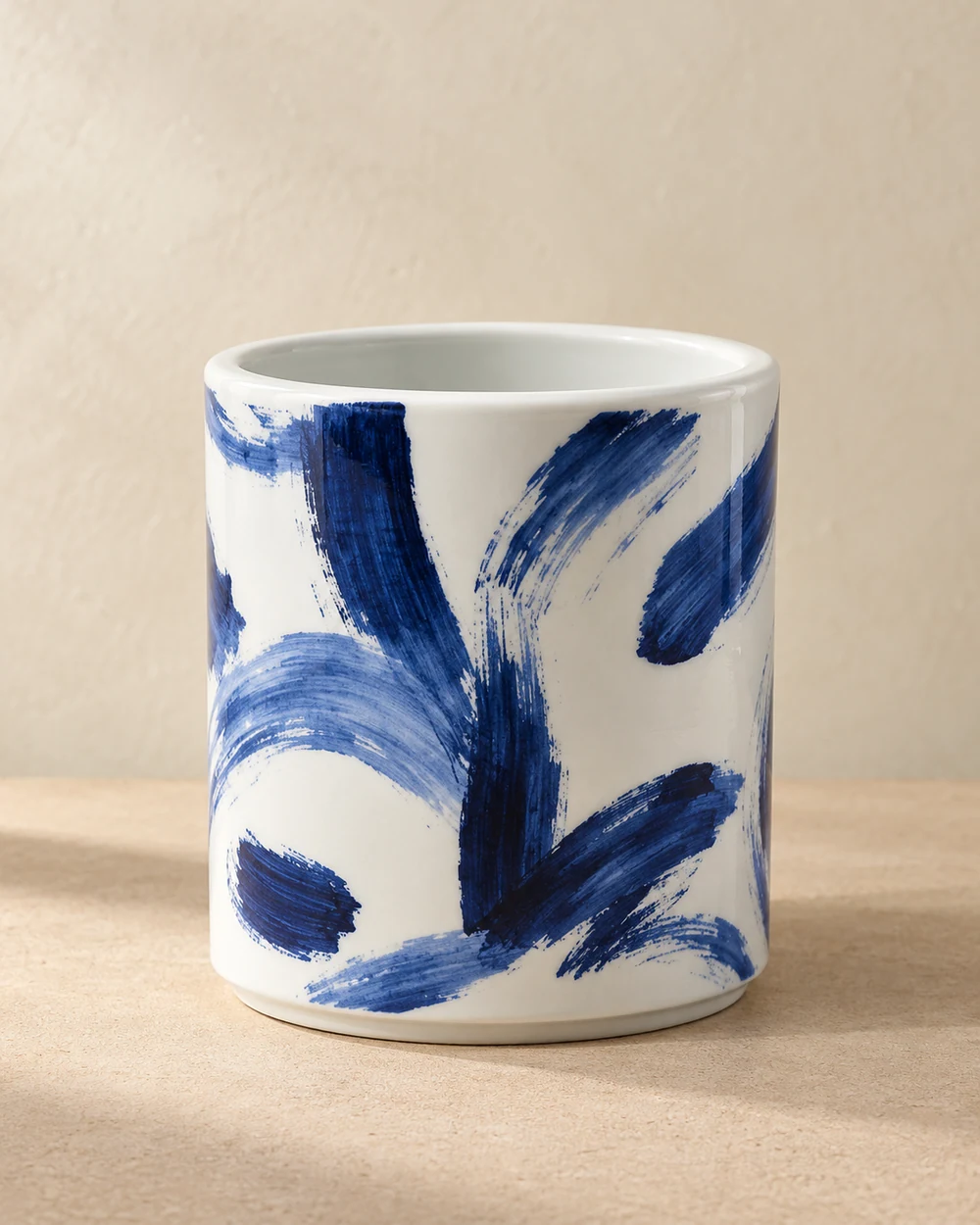
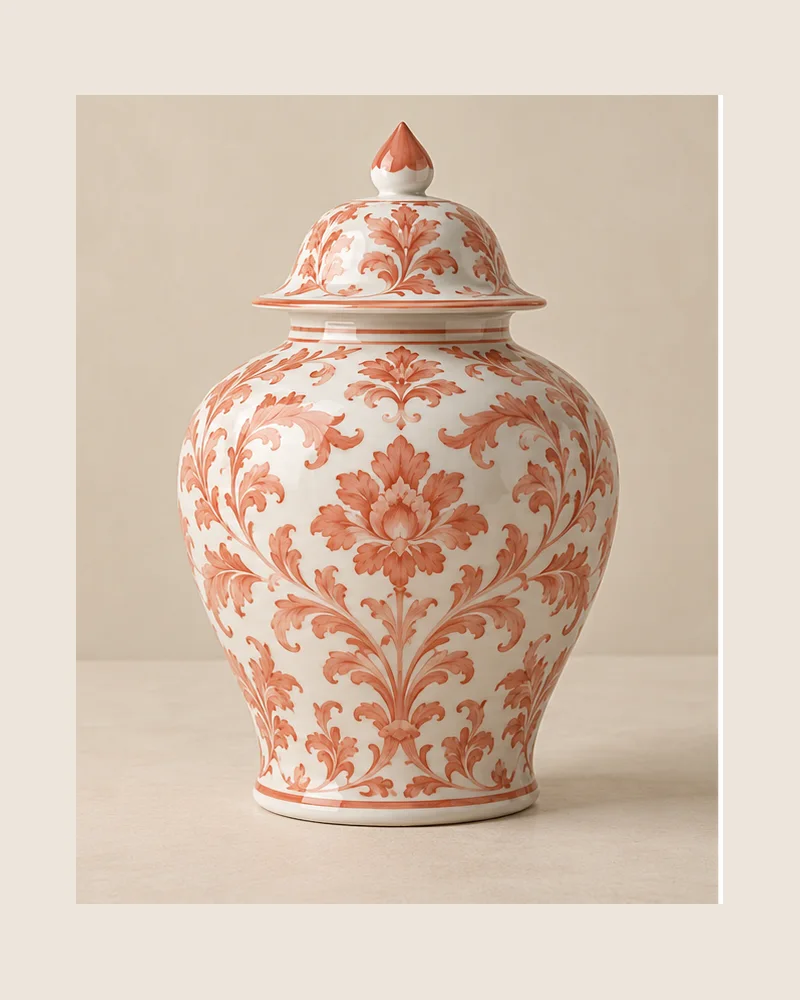
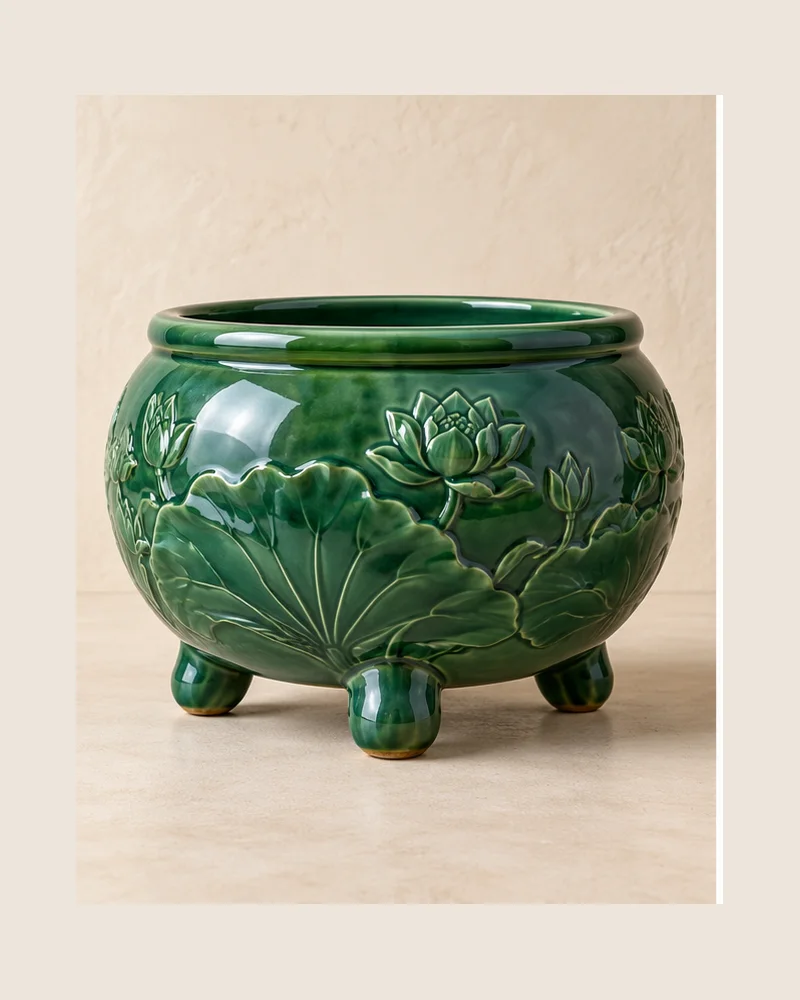
Materials & care
Ceramic planters with drainage or cachepots: which should you buy?
A practical comparison of direct planting pots and decorative cachepots, covering water routes, inner-pot clearance, maintenance access and product information.
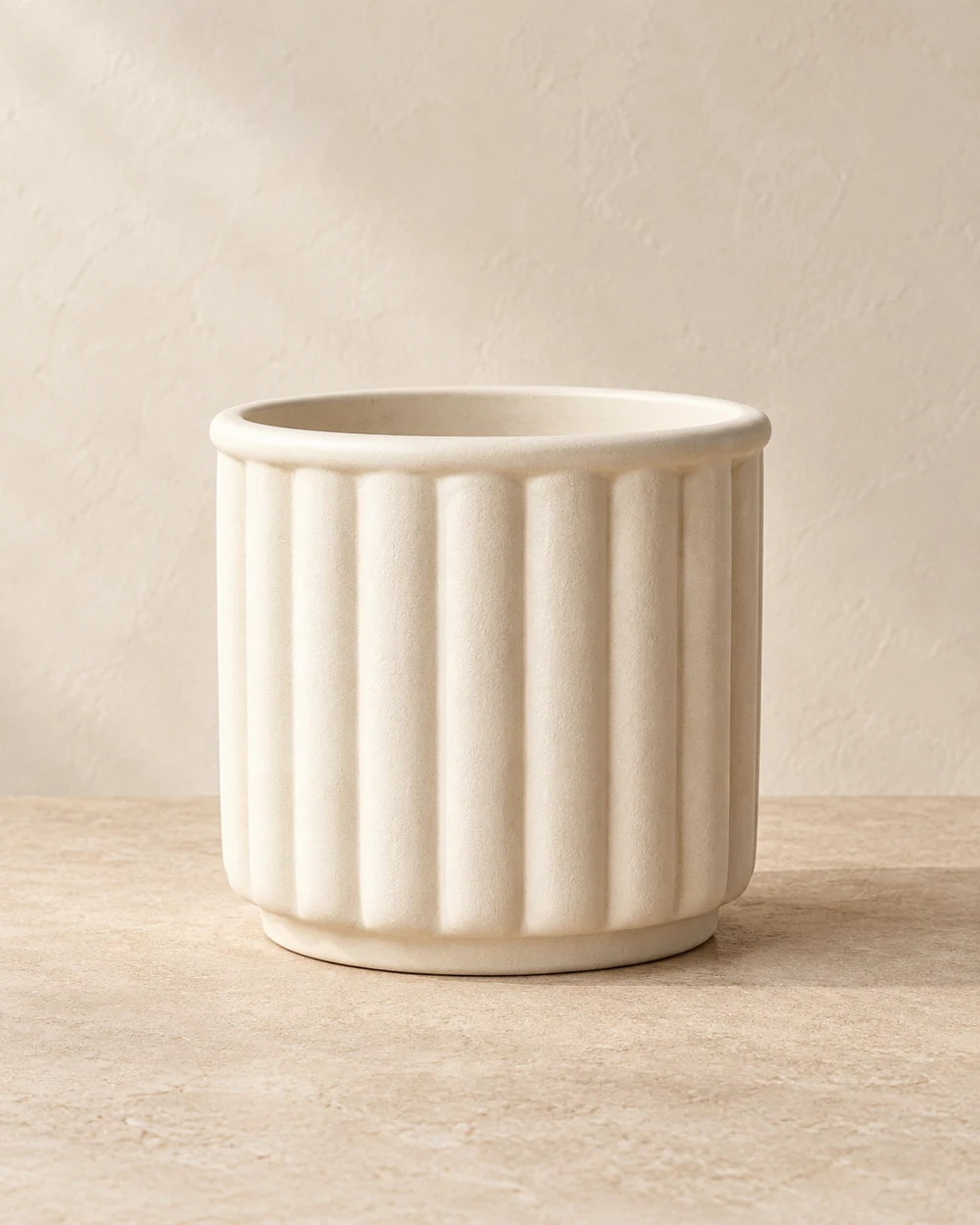
Ceramic planters with drainage holes and decorative cachepots solve different problems. A direct planting container holds the growing medium and plant. A cachepot surrounds a separate inner pot. For a retail collection or an interior planting scheme, choosing between them changes how the object will be watered, moved, cleaned and replaced.
Start with the maintenance routine. A planter that looks right in an empty room can become awkward once a mature plant, a wet inner pot and a person carrying out routine care are involved. This guide develops a buying method for that everyday situation. It does not confirm the suitability of any pictured product for direct planting, water containment, outdoor exposure or frost.
Draw the water route before choosing the finish
For a pot intended for direct planting, drainage is a central part of the specification. The Royal Horticultural Society's container-growing guide identifies drainage holes as essential for ordinary planted containers. Its advice concerns horticultural use; it does not certify a decorative vessel in a supplier's catalogue.
For a cachepot, the plant can remain in a separate nursery container. The care arrangement then needs a way to deal with water leaving that inner pot. One practical approach is to remove the inner pot for watering, allow it to drain in an appropriate location and return it afterwards. The suitability of that routine depends on the plant, its size and the maintenance team's access.
Write down where water will go in the proposed arrangement. If the answer is only “inside the ceramic pot,” the project still has an unresolved moisture-management question. A glazed surface or a photograph of a plant inside the vessel cannot answer it.
Compare usable space, not the outside diameter
The widest part of a ceramic planter may be its belly or decorative rim. Neither measurement necessarily describes the usable opening. A nursery pot can pass through the opening yet stop too high because the interior narrows further down.
For a decorative outer planter, record the widest rim of the inner pot, its base width and the position at which it will sit. Then consider how the pot will be lifted out. Enough clearance for insertion is not automatically enough clearance for fingers, a carrying aid or removal after the plant has grown.
An illustrative fit calculation can make the problem clear. Suppose an inner pot has a 24 cm rim and the proposed usable opening is 25 cm. That leaves 1 cm across the full diameter, or approximately 5 mm on each side if the pot is centred. These are hypothetical dimensions, not dimensions of our products. The calculation says nothing about manufacturing tolerance or whether removal will be practical; it exposes how little room the drawing actually provides.
| Question | Direct planting pot | Decorative cachepot |
|---|---|---|
| What must fit? | Planting volume and the chosen planting system | The inner pot, including its widest rim |
| Where does water leave? | Through a confirmed drainage arrangement | Through a maintenance routine for the inner pot |
| What is moved during care? | Often the whole planted container | Potentially only the removable inner pot |
| What protects surrounding finishes? | An agreed compatible tray or protection arrangement | A confirmed moisture-management and inspection method |
Use the table to compare two proposed systems. It is not a reason to drill a decorative pot or add an improvised liner without checking the product's intended use.
Test the care task in the actual position
Imagine the selected planter beside a hotel reception desk. From the front, it may have generous access. From above, the foliage could obstruct the rim; behind it, a wall may prevent a person from lifting the inner pot comfortably. Review the care task from the position in which it will actually happen.
A useful trial uses the intended inner container and a representation of the plant's occupied space. Check the removal route, the place where watering will happen and the route back to the planter. A lightweight empty container is a limited test because the planted assembly will behave differently. Final handling arrangements should be reviewed by the people responsible for the installation and maintenance.
This exercise often changes the buying decision. A narrower decorative opening may look more refined but make access difficult. A wider opening may reveal the inner pot, requiring a different visual treatment. A removable inner pot can simplify replacement, while a very large planted arrangement may make repeated removal impractical. Choose the system whose tradeoffs fit the project.
Keep indoor and outdoor requirements separate
“Ceramic planter” is a material category, not an outdoor performance certificate. Exposure, drainage, temperature conditions and the particular ceramic body and finish all matter. Specify the intended location and request evidence relevant to that use before treating an indoor decorative reference as an outdoor planting product.
Likewise, describe which surfaces need protection. A polished reception floor, a timber shelf and a tiled terrace have different consequences if moisture escapes. The person specifying the planter should coordinate with the person responsible for the surrounding finish. General advice cannot replace the selected product's care instructions or a site-specific assessment.
For retailers, keep these distinctions in the product information customers receive. A customer searching for “indoor ceramic cachepot” is making a different choice from someone seeking a “ceramic planter with drainage.” Clear wording reduces the chance that an attractive decorative cover is sold for an unconfirmed planting use.
Build an assortment around care requirements
Organise a ceramic planter range by the job it supports, then by appearance. For example, a small removable-inner-pot format and a large display planter can share a finish while requiring different care guidance. Grouping them only by colour hides that distinction.
Keep a simple record for each selected reference: intended use, compatible inner container if applicable, drainage arrangement, surrounding-surface precautions and cleaning guidance. Mark unresolved fields clearly in your internal selection sheet. Publish customer-facing specifications only when they have been checked for the actual SKU.
When comparing samples, review the interior and underside as carefully as the visible outside. The front image helps a customer choose the look; those less visible areas help the buyer decide how the product can be used. Keep the approved sample reference with the final product information so that future replenishment is compared against the same record.
Prepare a useful planter enquiry
Explore the ceramic planter collection and use the wholesale project guide to organise the buying brief. Include the intended setting, whether you want direct planting or a decorative outer pot, estimated quantities and destination. If an inner pot is already selected, provide its actual measurements and images.
A planter quotation request with that information allows the conversation to address fit and care as well as colour. Product dimensions, material, drainage, availability and other specifications must be confirmed individually before an order is agreed.