Materials & care
Blue and white porcelain care for retail displays
Organise handling, confirmed care instructions and condition reporting for blue and white porcelain in a working retail display.
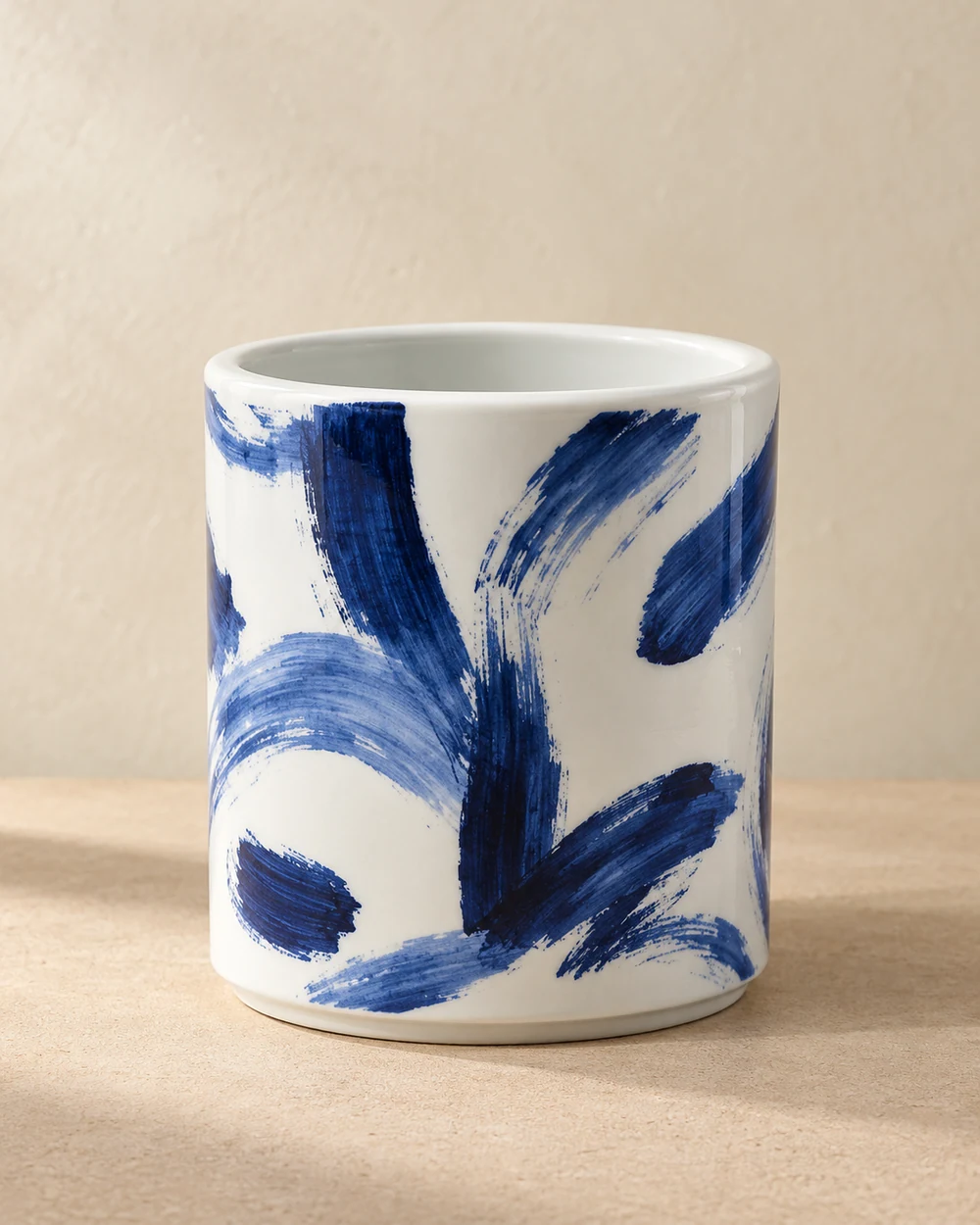
Blue and white porcelain care in a retail display is largely a question of organising everyday work. Who moves the jar when a shelf is cleaned? Where does its lid rest? What happens when a member of staff notices a mark? A clear routine can answer these questions before a hurried display change creates confusion.
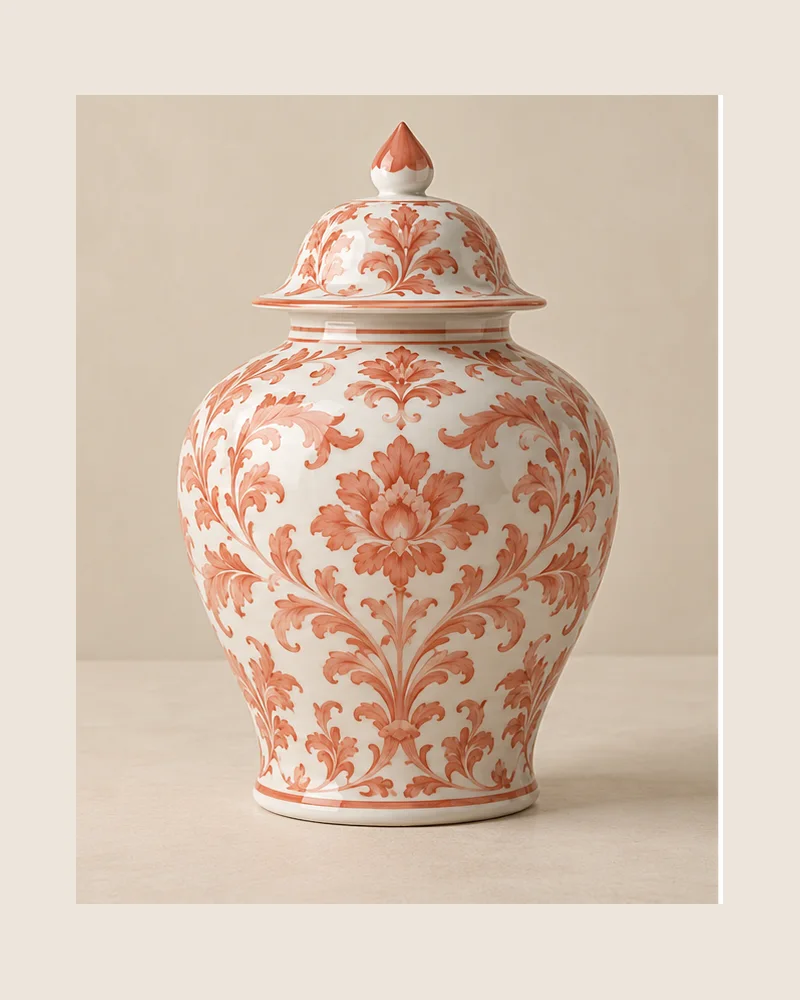
This guide is for teams caring for contemporary decorative porcelain jars and vases. Product-specific instructions take priority. Antique, repaired, unstable or unusually decorated objects need appropriate specialist advice. The cover is a catalogue reference and does not demonstrate the composition or condition of any actual item.
Identify the finish before choosing a cleaning method
Blue and white describes an appearance, not a complete care specification. An object may have additional decoration or a surface treatment that cannot be identified reliably from a product photograph. Ask for the care instructions for the selected reference and retain them with the buying record.
The Canadian Conservation Institute's care notes warn that decoration applied over glaze can be vulnerable and that condition matters when choosing a cleaning treatment. They also advise against improvised chemical stain removal. These are conservation principles, not permission to wash every decorative jar.
For a new retail reference, request a clear statement of routine care and any exclusions. If the supplier has not confirmed a method, mark that question as open. Do not turn a general internet recommendation into the product's own maintenance instructions or infer dishwasher suitability from the word porcelain.
Build blue and white porcelain care into display planning
A shelf arrangement should leave room for the work it requires. Consider how staff will reach the back of the display, remove individual objects and clean the support surface. If every routine task requires moving several nearby pieces, reconsider the arrangement before adding more stock.
Keep the handling route clear and prepare a suitable temporary resting place before moving anything. For covered jars, follow the product-specific instructions for separating and moving components. Keep each lid associated with its own body. A display photograph is useful for restoring the composition, but it should not replace an item reference.
Avoid relying on a finial, decorative projection or apparent handle as a lifting point unless the appropriate product instructions support that action. Staff should know when an item requires another person or a specialist handling arrangement. A tall floor vase should not be treated like a small shelf ornament simply because both belong to the same range.
Separate routine dust control from stain treatment
Routine care and treatment of a persistent mark are different jobs. The first follows a confirmed maintenance method. The second may require an assessment of the finish, condition and nature of the mark. Keep that distinction in the staff instructions so a difficult spot does not become an invitation to experiment.
Record the location of a concern and photograph it under useful lighting. Include an overview that identifies the object. If the mark appeared after a display change, record that sequence without guessing its cause. Ask the designated contact to decide the next step.
Do not keep trying stronger products until the mark disappears. A visually improved area would not by itself prove that the finish remained unchanged. Where the supplier cannot resolve a condition question, an appropriate ceramics specialist may be needed.
Write a short care card for the actual reference
A care card should be specific enough to guide a new member of staff. “Clean carefully” leaves the most important decisions unanswered. Keep the wording practical and identify the source of each instruction so it can be checked when the range changes.
| Care card field | Information to retain |
|---|---|
| Product identity | Name, SKU and finish reference |
| Permitted routine | Confirmed method and any required materials |
| Handling | Component arrangement and product-specific moving instructions |
| Exclusions | Methods or uses not confirmed or expressly prohibited |
| Concern reporting | Contact and photographs needed |
| Review | Date and the instruction revision in use |
Keep intended use visible. A decorative vase approved for a dry arrangement has not automatically been approved to hold water. A covered jar sold as decor has not automatically become a food-storage container. Send customers the confirmed information for the item they select, rather than general statements about all ceramics.
A hypothetical shop routine with a clear stopping point
Imagine a shop changing a console display each week. One staff member prepares the temporary surface and identifies the components. Another follows the confirmed moving arrangement. The team records which jar belongs in each position before cleaning the empty console according to its own surface instructions.
During the change, they notice an unfamiliar line near a jar's rim. They stop work on that piece, keep its components together in an appropriate location and report the observation. They do not describe it as harmless glaze character or attempt a repair without a product-specific assessment.
The manager checks the care record and contacts the relevant supplier. The display can be adjusted around the held item while the question is resolved. This is a hypothetical operating example; it is not evidence of a defect, a customer incident or a promised response service.
Preserve the information when stock moves
Care instructions often disappear when a display item is transferred between branches, used for photography or sold from the showroom. Attach the care record to the SKU in the inventory system, not just to a printed sheet near the original shelf. Make sure any component identity remains understandable after the move.
When a buyer changes the selected finish, review the instructions again. A similar silhouette or color name does not prove that a previous treatment remains suitable. Retain old instructions as an historical record, but make the current version easy for staff to find.
For a customer purchase, provide the confirmed care guidance and explain any unresolved intended-use question before sale. Keep marketing descriptions separate from functional promises. A photograph of flowers beside a vase, for example, does not establish that the vessel has been assessed for direct water use.
Make maintenance part of selection
Review how the range will be displayed and maintained while choosing the pieces. A visually complex grouping may be worthwhile, but the work needed to manage it should be understood. Ask whether the proposed team can follow the required routine and whether the display leaves suitable access.
Browse our temple jars, ginger jars and porcelain references. Our assortment guide covers how different silhouettes share a display. Send a product enquiry with the references and intended use when you need the final specification and care information for a purchase.