Buying guides
Blue and white temple jars: building a wholesale assortment
Compare temple jars and ginger jars by silhouette, pattern density and assortment role, with a practical method for selecting pairs and reviewing a retail range.
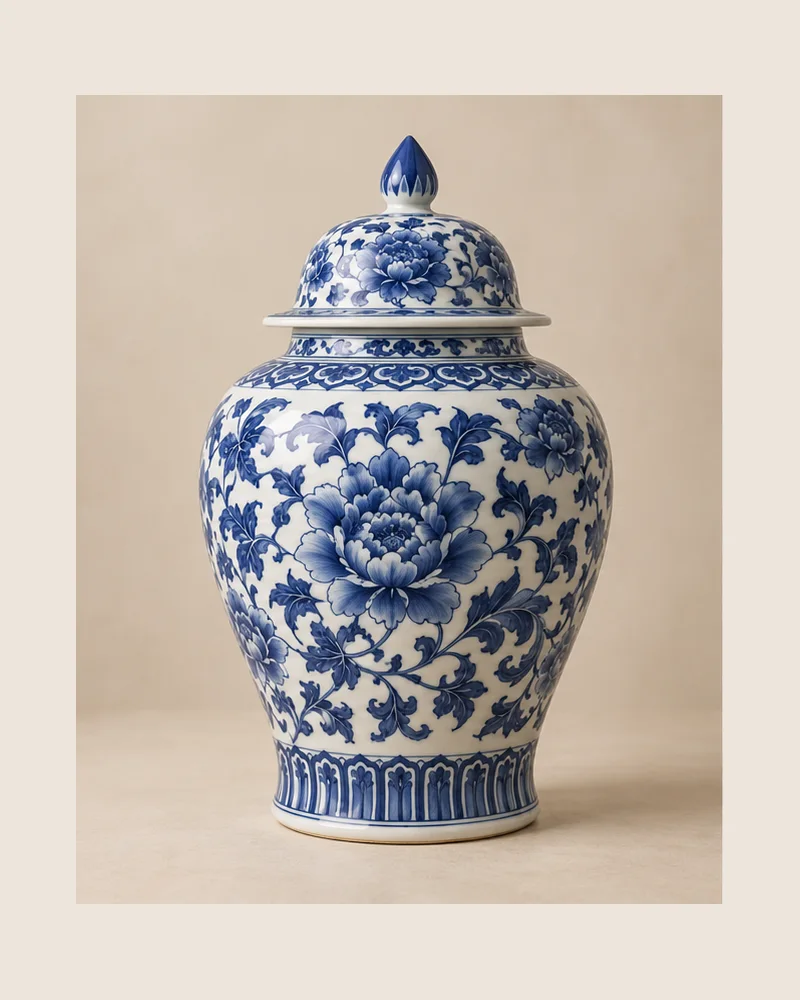
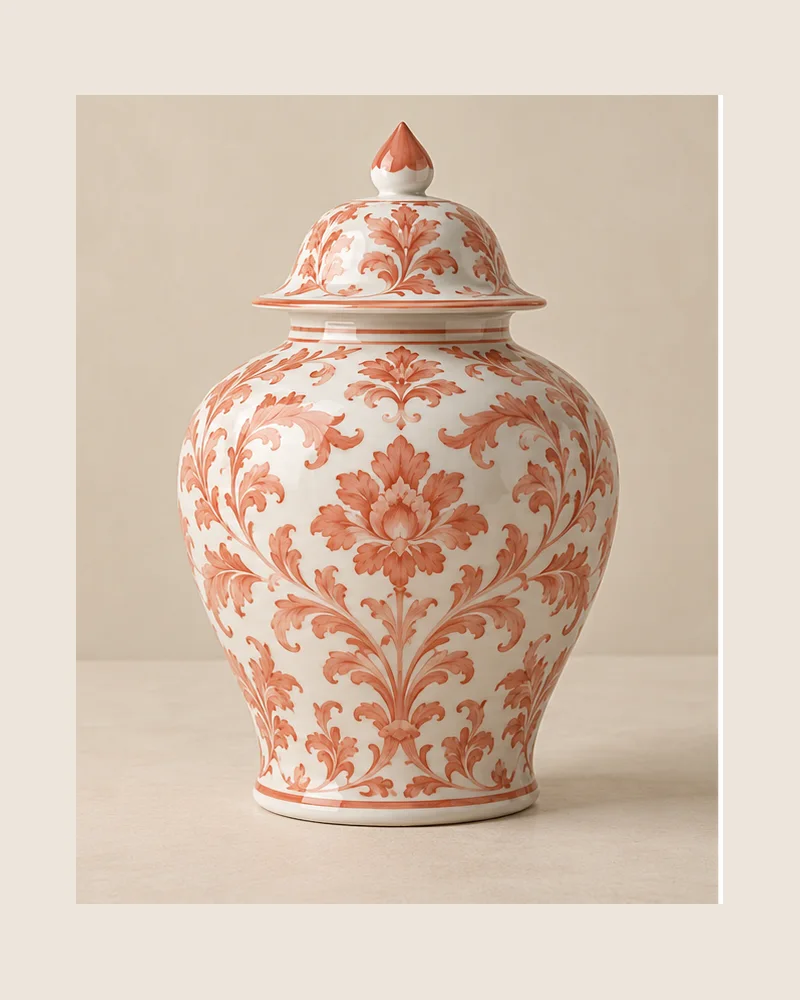
Blue and white temple jars can anchor a homeware collection, but buying several attractive jars does not automatically create a coherent assortment. A retail buyer needs pieces that perform different jobs: a recognisable focal object, a quieter companion and a form that can fit into more customers' rooms. For an interior buyer, the same decision becomes a question of how several objects share one space.
This guide explains how to compare decorative temple jars and ginger jars as an assortment. The terms are used inconsistently across contemporary catalogues, so the buying decision should follow the actual silhouette and lid construction shown for each item. Images in our collection are selection references; they do not establish antique provenance, stock availability or confirmed production specifications.
Temple jar or ginger jar: compare the outline first
In a product search, “temple jar” often leads to a covered vessel with a pronounced shoulder and an elevated lid or finial. “Ginger jar” often leads to a rounded covered form with a lower visual profile. Those descriptions help a buyer search, but they are not a dependable technical standard. A supplier may apply both names to similar objects.
Build a shortlist from a front view that includes the entire lid and base. Then compare the maximum visual width, the height of the lid relative to the body and the direction in which the shoulders turn into the neck. A broad, low form can sit comfortably beside a tall lamp without competing with its outline. A high finial can become the main vertical accent on a console, especially when the surrounding objects are low.
The practical result is a role-based assortment. Give each shortlisted item a reason to exist beside the others. If two jars have almost the same outline and decorative density, the second may add little choice even when the floral drawing differs.
Use pattern density to give the range a hierarchy
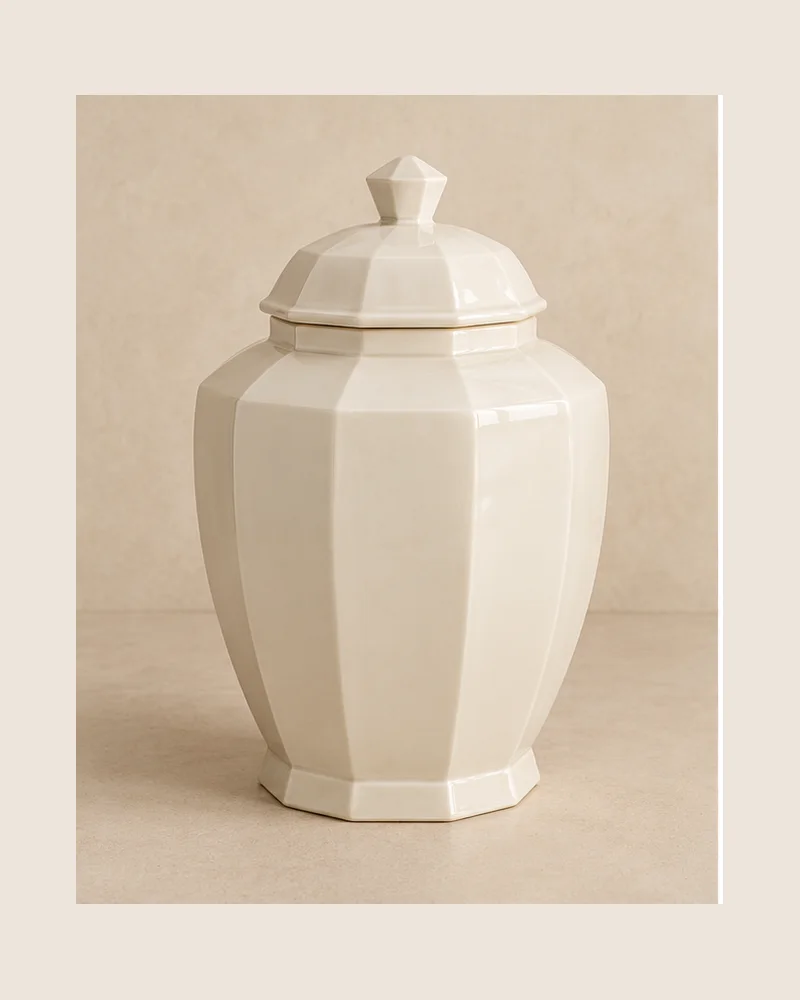
A heavily decorated blue and white porcelain jar attracts attention at a distance. A piece with larger undecorated areas can provide a calmer interval in the same display. Neither treatment is inherently better; their relationship matters.
Try a simple review on a neutral background. Place the front images at a comparable apparent height and reduce them to the size at which they would appear in a collection grid. Ask which shape you notice first and whether the decoration remains legible. Then view each image larger to consider the drawing. The small image tests the buying journey; the large image tests the details that support the choice.
| Assortment role | Visual approach | Why it earns a place |
|---|---|---|
| Focal piece | Strong silhouette or concentrated decoration | Gives the range a recognisable centre |
| Companion | Related blue tone with a quieter surface | Allows coordinated purchases without repeating the same emphasis |
| Shape alternative | A different shoulder, lid or body proportion | Serves a different furniture position or room composition |
| Controlled pair | Two coordinated pieces selected together | Supports a symmetrical arrangement when that is the intended use |
Treat this table as a planning method, not a statement about the performance or availability of a particular SKU. A small launch can use only two roles if the remaining choices would duplicate them.
Distinguish a coordinated pair from two matching catalogue entries
The phrase “pair of temple jars” can conceal several different expectations. A buyer may want identical motifs, complementary motifs or simply two objects with similar colour and scale. Decide which relationship the project requires before asking for a quotation.
For a symmetrical console, compare the lid heights and the position of the main motifs together in one photograph. For a less formal shelf, slight differences in outline may be part of the intended composition. Record the intended relationship in the purchase brief so that the supplier and receiving team judge the set against the same idea.
Consider a hypothetical retail launch with room for three references. Buying three densely patterned jars in similar outlines offers customers three versions of one decision. Choosing a focal covered jar, a quieter rounded jar and an open vase gives the display more ways to be used. That is an assortment judgement, not evidence that one arrangement will sell faster. Sales results must be measured after the range is available to real buyers.
Review blue and white decoration under the intended lighting
For background on the material tradition, the V&A's account of Chinese blue-and-white ceramics explains the use of cobalt decoration and its international circulation. That historical context can help a buyer recognise a visual tradition. It does not establish the origin, age or manufacturing method of a contemporary product shown online.
Keep historical language separate from your actual product description. “Blue and white porcelain jar” describes a useful search and selection category. “Antique,” a named historic period or a specific place of production requires evidence for that individual item. A decorative motif alone cannot supply it.
When reviewing colour, keep the sample's lighting conditions consistent. A comparison made beside a bright window and another made under a warm lamp can lead the team to approve different appearances. Use the physical sample as the buying reference and retain the approved images as supporting records. Do not promise an exact screen-to-product colour match.
Make the buying brief usable by the receiving team
An assortment sheet should preserve the decision, rather than just collect product pictures. Include the catalogue reference, intended role, image of the approved view, whether the lid is included and any requirement for a coordinated pair. Keep confirmed dimensions and packing information alongside the item when those details become available.
Separate aesthetic approval from production and delivery approval. A buyer can approve a silhouette while still waiting for a physical sample or an agreed packing arrangement. Marking those decisions separately prevents an attractive reference image from being mistaken for a complete order specification.
At receipt, compare each item with its agreed record. Check that the correct body and lid have arrived together, and review a pair together before splitting it between displays. Keep any replacement discussion tied to the item reference and photographs. This is more actionable than saying that a shipment looks different from the original mood board.
Choose the next step for your project
Browse the temple jar and ginger jar references in the collection, then shortlist the roles your range actually needs. Our broader guide to specifying jars and planters covers sample review, measurements and quotation preparation in more detail.
When you request a wholesale porcelain quotation, include your selected references, estimated quantities, destination and whether you need coordinated pairs. The collection can start a useful conversation; the final product specification and commercial terms belong in the confirmed quotation.