Buying guides
Temple jar lid fit: a sample approval checklist
Separate lid appearance, seating and handling decisions, and keep body-and-lid pairings identifiable from sample review through receiving.
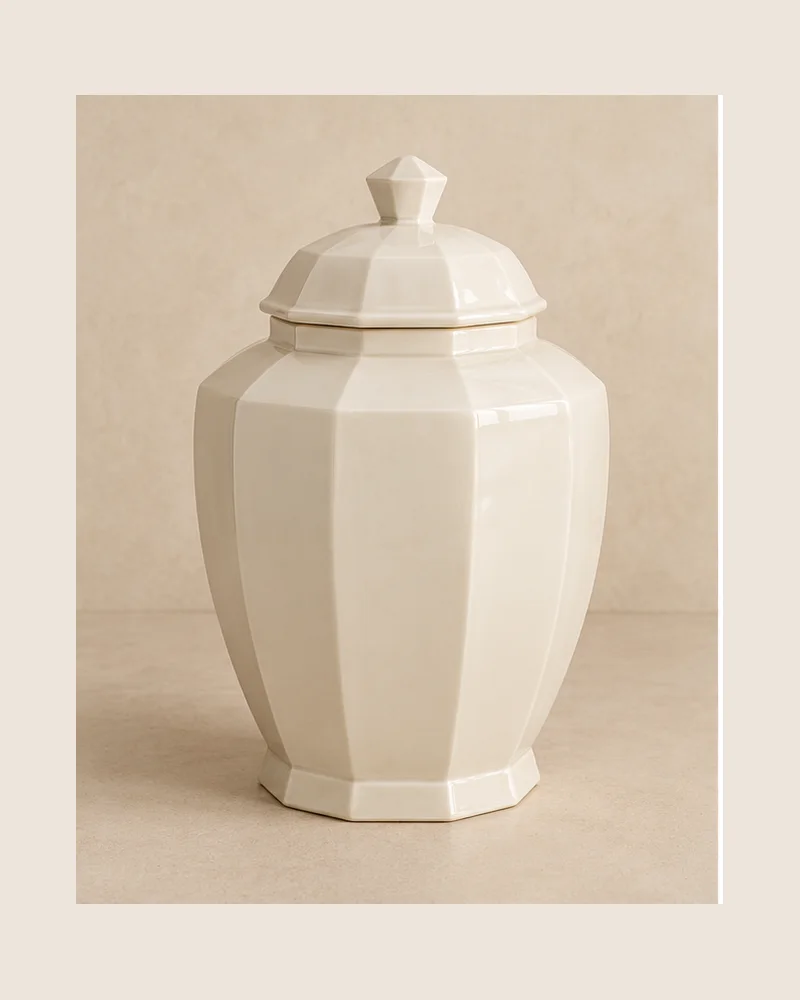
Temple jar lid fit deserves its own sample review. A covered porcelain jar may look convincing in a catalogue photograph while leaving practical questions unanswered: does the supplied lid sit securely in its intended position, can staff remove it comfortably, and will the body and lid remain identifiable after unpacking? For a wholesale buyer, these questions affect receiving, display and replacement discussions.
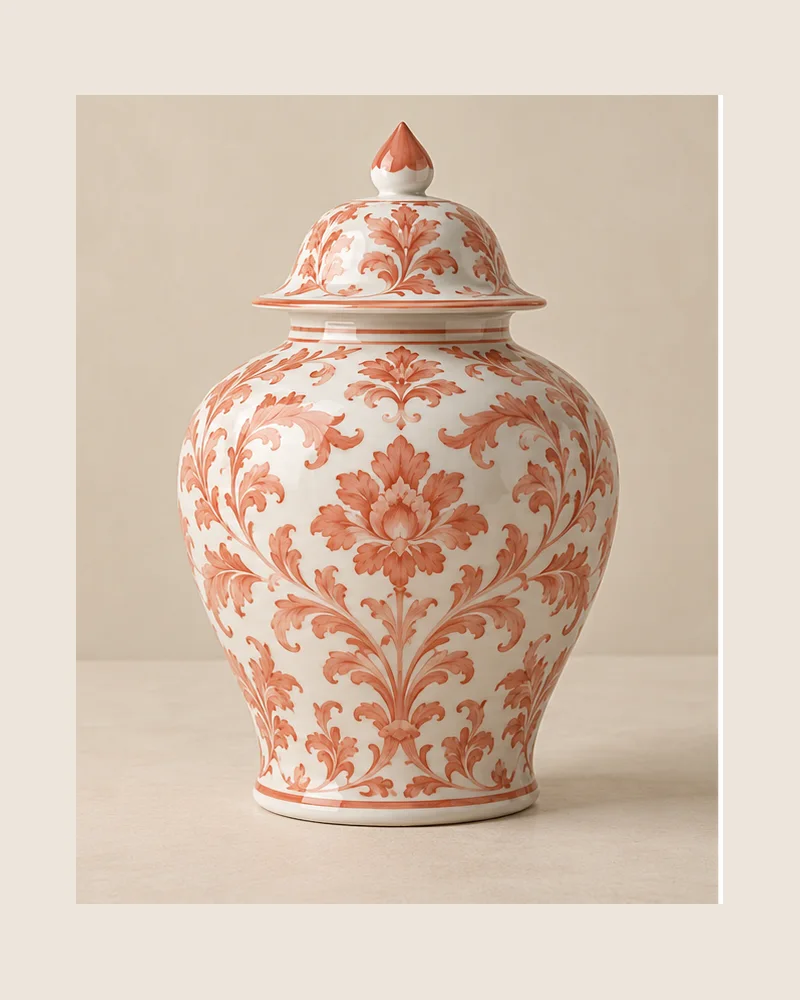
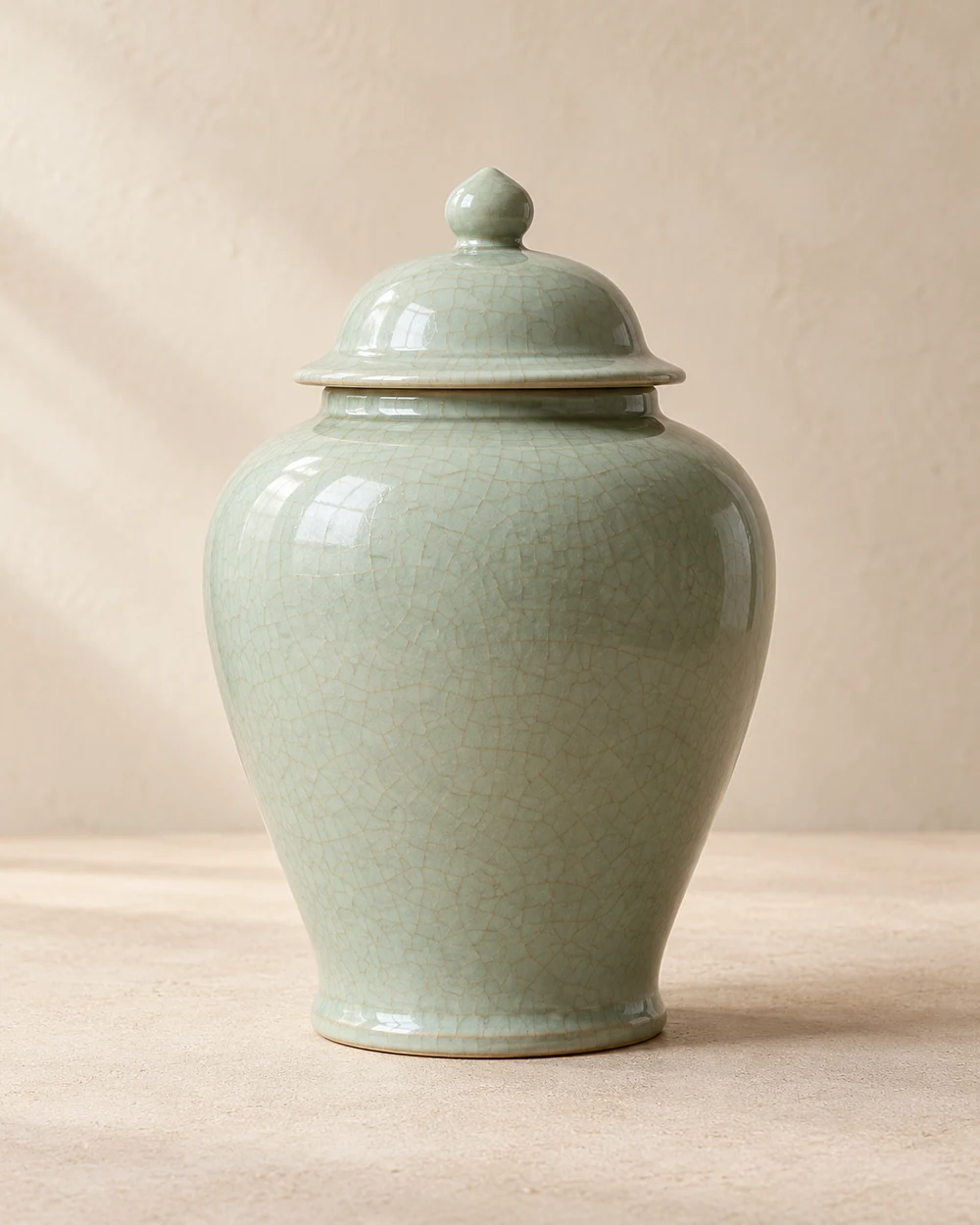
This guide develops an approval method for decorative temple jars and ginger jars. It does not propose universal clearance tolerances or confirm the construction of any catalogue reference. The cover shows a selection reference; final dimensions, finish and supplied components need confirmation for the chosen product.
Define what the lid is expected to do
Begin with use. A jar intended to remain closed on a reception console has a different operating routine from a shop display that staff open to demonstrate the interior. Neither arrangement establishes that the vessel is suitable for food storage, liquid containment or frequent handling. Those are separate product questions.
Record whether the lid is supplied as a decorative component, whether customers are expected to remove it, and whether the jar will ever be displayed open. Ask for the proposed handling instructions before deciding that an impressive finial makes a convenient grip. A photograph cannot show how the weight of the complete lid is supported.
The Canadian Conservation Institute's ceramics handling guidance recommends examining an object before moving it, using two hands and removing loose lids where necessary. Its museum context supports careful handling; it does not certify a modern jar or prescribe a commercial fit tolerance.
Review temple jar lid fit with the actual proposed set
A body-only sample cannot answer the lid question. Request the complete proposed combination and identify both components in the sample record. Start with an assembled overview, then inspect the parts separately on a stable, suitable surface. Follow the supplier's handling method; stop if a component appears damaged or difficult to control.
Observe how the lid reaches its intended resting position. Does it sit as the sample description suggests? Is there an obvious obstruction or an unexpected change in angle? Record observations without forcing the parts together or treating a visual gap as a measured defect. Whether a difference is acceptable depends on the agreed construction and reference sample.
Ask for clarification if the sample requires a particular orientation. If the supplier proposes that a lid belongs with one specific body, preserve that pairing in the order and receiving records. Do not assume that lids from visually similar references are interchangeable.
Separate appearance, seating and handling decisions
One approval box hides several decisions. A buyer may like the silhouette but still need an explanation of the seating arrangement. A receiving team may confirm the correct components yet lack authority to accept a different finish. Keep these issues visible rather than allowing a general approval email to resolve everything by implication.
| Review area | Evidence to retain | Question to resolve |
|---|---|---|
| Assembled outline | Full view including base and finial | Is this the intended overall form? |
| Body and lid identity | Reference for each component | Are these the parts being offered together? |
| Resting position | Side views and written observations | Does seating correspond to the agreed sample? |
| Surface appearance | Views made under consistent lighting | Do the visible parts meet the finish brief? |
| Handling routine | Product-specific instructions | Can the intended team manage the parts as proposed? |
This is a purchasing worksheet, not a test protocol. Numeric requirements should be agreed with the supplier and an appropriate reviewer for the actual item. Inventing an arbitrary allowance can create a requirement that neither party has assessed.
Check the view that matters in the finished display
A high camera angle can reveal the top of a lid while concealing the relationship between the shoulder and rim. A low entrance view can make that relationship more noticeable. Review the sample from the likely viewing position as well as from a convenient inspection angle.
For a coordinated pair, place both complete jars in the proposed arrangement. Compare the silhouette and the visual relationship of each lid to its own body. Keep the finish review separate from the fit record: two blue tones may look different even when both lids sit as intended.
Avoid converting a room photograph into a dimension claim. Measure the actual placement separately and obtain confirmed assembled height, maximum width and base footprint when needed. Our broader jar specification guide explains how those measurements enter the buying file.
A hypothetical approval that stays open for the right reason
Imagine a retailer selecting two covered jars for a console display. The buyer likes the bodies and approves their decoration. One lid, however, appears tilted in the assembled sample photograph. The supplier has not yet explained whether the image shows normal seating or an incorrect position.
The useful decision is to approve the appearance provisionally while leaving the complete set unapproved. Request another view and a product-specific explanation. If another sample is proposed, identify it as a new revision and repeat the relevant review. Do not write “approved” against the whole SKU while expecting the unanswered question to resolve itself later.
Once the issue is resolved, save the agreed combination, images and date together. This example is an editorial scenario, not a description of a completed customer order, a measured defect or a promise that replacement stock exists.
Keep pairings intact through receiving and storage
Agree how the packing list will identify a set before dispatch. Ask whether the lid is packed with its body or in a separate protected location, and how the receiving team can associate the parts. Leave the packaging design to the supplier and logistics specialists who can assess the actual objects and journey.
At receipt, reconcile references before distributing stock between shelves or display rooms. If several sets are unpacked together, work in a sequence that prevents lids becoming anonymous. Any identification method should avoid damaging the ceramic surface and follow the supplier's instructions.
If a fit concern appears, preserve the identity of the original set. Report the body reference, lid reference, carton reference and clear photographs. Swapping parts repeatedly may obscure what arrived and does not establish that a substituted combination is acceptable.
Ask about replacement arrangements before relying on them
A lid is part of the usable display, so its loss can matter even when the body remains intact. Ask whether a replacement can be considered for that exact reference and what information would be needed. Availability, matching and timing require confirmation; they should never be inferred from the existence of similar jars online.
Retain the approved sample record after purchase. A later enquiry can then identify the original combination instead of relying on a cropped photograph of an isolated finial. If the original reference has changed, request a fresh review rather than assuming the new component will fit.
Explore our temple jar references and ginger jars, then send a sample enquiry with your preferred references, intended display and the lid questions you need answered. The goal is a complete, identifiable set with an agreed use and approval record.