Projects
Large floor vases for hotel lobbies: planning a 150 cm brief
Plan a large porcelain floor-vase requirement around sightlines, operational footprint, delivery access and installation responsibilities. The 150 cm size is an example.
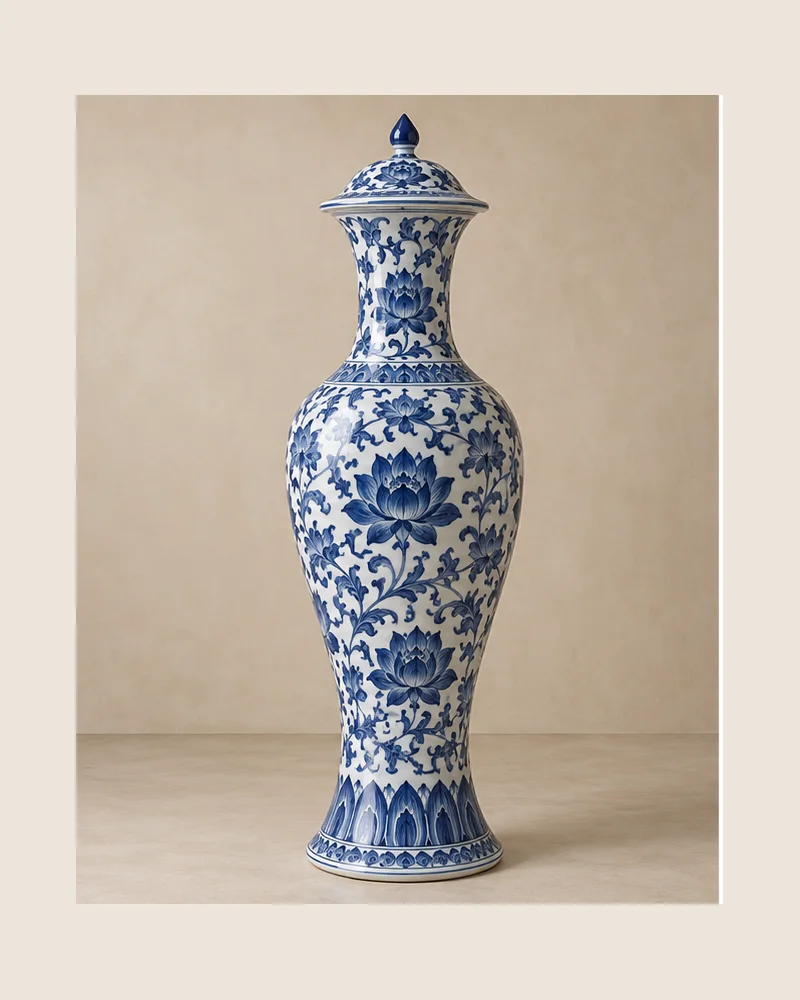
A large floor vase can give a hotel lobby a strong focal point, but a proposed 150 cm porcelain vase needs a different buying brief from a tabletop accessory. The decision involves the room, the route into it and the people who will install and maintain the object. Overall height alone leaves most of those questions unanswered.
Here, 150 cm is an example of a project size requirement. It is not a confirmed dimension, available SKU or production commitment from Willshine Planter. This planning guide is for decorative floor-standing vessels; it does not provide structural engineering, anchoring instructions or approval for a public-space installation.
Decide what the vase should do in the room
Define the focal point from the visitor's normal approach. A large porcelain floor vase placed beside a reception desk may frame the desk; the same form set further into the room may become an independent object. Its relationship to furniture, glazing and circulation changes the effect.
Use an elevation or a simple scaled drawing to compare the proposed outline with the nearby furniture. Consider the widest body dimension as well as the height. A narrow neck can make a vessel appear slender in a front image even though its lower body occupies substantial floor area.
Make one decision about the arrangement before refining the finish: will the vase be empty, contain a decorative arrangement or be used for flowers? An arrangement changes the occupied outline and may change handling and maintenance requirements. Water-holding suitability and any internal system must be confirmed for the actual product. A decorative exterior cannot establish them.
Separate the visual footprint from the operational footprint
The base is the area where the object contacts its support. The maximum body width describes the space the vessel occupies. The operational footprint includes access needed for installation, cleaning and the intended arrangement. These are related measurements, but they are not interchangeable.
For a hypothetical vase with a 50 cm maximum width, drawing only a 50 cm circle on the plan shows the object's body footprint. It does not establish a suitable clearance around it. The project team must determine the surrounding space from the actual circulation, applicable requirements and installation review. The 50 cm measurement is an example, not a catalogue specification.
Test the position with a lightweight outline or a clearly marked mock-up during design review. Ask whether people naturally pass close to it, whether luggage approaches the proposed position and whether cleaning equipment needs the same space. This can reveal a poor location before a finish is approved.
Trace the entire receiving route
Start at the delivery point and follow the object to its final location. Include doorways, turns, lifts, thresholds and temporary holding areas. The route should be assessed using the confirmed packed dimensions and handling arrangement, not only the unpacked vase height.
| Stage | Information needed | A useful review question |
|---|---|---|
| Delivery arrival | Agreed shipment and unloading arrangement | Who receives the shipment and where can it be held? |
| Internal route | Packed dimensions and handling requirements | Can the proposed route accommodate the actual packed unit? |
| Unpacking | Agreed opening and inspection method | Where can the team inspect it without blocking normal operations? |
| Final placement | Confirmed object data and site review | Who approves the support, position and handling method? |
| Future maintenance | Care instructions and access requirements | Can routine work happen without improvised movement? |
A route that works for an empty doorway can fail when the building is operating normally. Record access times and responsibilities as part of the receiving plan. Do not leave the delivery team to discover the placement constraints on arrival.
Request a handling plan for the actual object
Porcelain floor vases can have narrow necks, projecting rims or decorative components. Their appearance does not identify suitable lifting points. Obtain the actual weight, construction information and manufacturer handling guidance, then have the installation team review the plan.
Avoid improvising advice such as lifting by a rim, using a lid as a handle or filling a vessel with ballast. Those choices can introduce loads or stresses that the product was never specified to carry. Stability and any restraint system need an appropriate site-specific review, especially in areas accessible to the public.
For a covered floor jar, the lid creates another handling and display decision. The buying brief should state whether the lid is displayed on the body, secured by an approved arrangement or stored separately during installation. The person approving the visual arrangement and the person approving the installation should be working from the same confirmed information.
Compare quotation scope before comparing totals
Two quotations for large decorative floor vases can include different services. One may describe the object only, another may include a packing arrangement, and neither may include internal placement. A single total price can hide those differences.
Ask each party to identify what happens at delivery, who inspects the item and what documentation supports a damage report. Clarify the shipment basis and the responsibilities assigned to each party. The agreed terms, rather than a generic website description, should govern the transaction.
Treat replacement planning as part of the purchase discussion. If the room uses a coordinated pair, a replacement may need to be compared with the remaining piece. Record the approved appearance, references and any agreed variation so that the later discussion has a useful starting point. No general guide can promise that an exact replacement will be available.
Use a hold-point list to keep approvals clear
Before the project moves from concept to order, identify the decisions that still depend on evidence. A visual reference can be approved while actual dimensions, weight and installation requirements remain unresolved. A delivery route can be reviewed provisionally and then checked again against the packed unit.
For an illustrative lobby project, the first hold point might be agreement on the empty-vase outline. The next could be physical sample or finish review. A later hold point could be installation approval using confirmed dimensions and weight. This sequence prevents one approval from silently standing in for the others.
The structure is useful beyond hospitality. Retail displays, private interiors and reception spaces all benefit from keeping visual selection, product confirmation and installation approval distinct. The amount of review should match the actual object and setting.
Send a floor-vase brief with enough context
Start with the floor vase references in the collection. Include a room image or drawing you have permission to share, the proposed location, your target overall height, estimated quantities, destination and intended arrangement. Treat reference imagery as a direction for discussion until the product details are confirmed.
Our jar and planter specification guide covers the broader sample and quotation process. To discuss a large format, send a custom development enquiry or a trade quotation request. The team can then review the requirement against confirmed product and project information, without treating the 150 cm example in this article as an availability claim.
Further reading
The V&A introduction to Chinese blue-and-white ceramics provides historical design context. It is not evidence of the origin, age, size or installation suitability of any contemporary catalogue item.